
Mitigation Systems
Radon Mitigation System Installation in Sioux Falls
A mitigation system is a pipe, a fan, and a plan. The pipe and fan are the easy part. The plan, matching the system to how your foundation actually moves air, is what separates a real fix from a decoration.
What a Mitigation System Actually Does
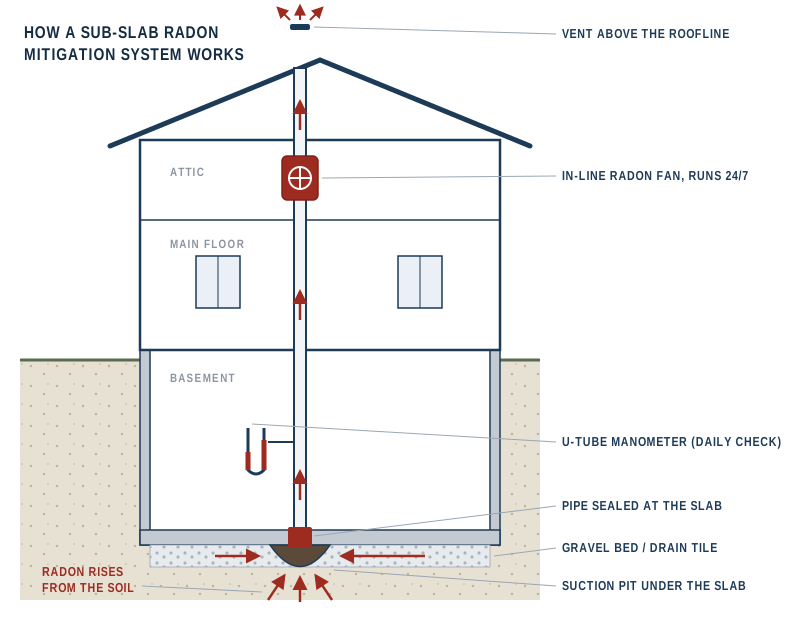
Radon rises out of the glacial soil under southeastern South Dakota and gets pulled into your house because a heated home acts like a slow chimney. A mitigation system beats that suction with its own. A sealed pipe pulls air from under your foundation, and a fan vents it above the roof where it dilutes to nothing.
Installed properly, it's remarkably effective. The EPA says these systems can cut indoor radon by up to 99 percent, and most homes end up at 2 pCi/L or lower. Sealing basement cracks alone, for the record, doesn't work. The EPA is explicit that sealing by itself hasn't been shown to lower radon reliably.
System Types, Matched to Your Foundation
Sub-slab depressurization
The workhorse. We core a hole through the basement slab, dig out a small suction pit, and run PVC up through the house or along an exterior wall. The fan pulls soil gas from under the entire slab. Typical radon reduction per the EPA: 50 to 99 percent.
Sump-pit suction
Many basements around the Sioux Falls metro already have a sump basket connected to drain tile. That's a ready-made suction point. We seal the pit with an airtight lid, keep the pump serviceable, and draw from there. Same reduction range, often less drilling.
Drain-tile suction
If perimeter drain tile loops the foundation, the system can pull from the loop itself and reach the whole footprint with one point.
Crawlspace submembrane
Dirt-floor crawlspaces get a heavy plastic membrane sealed over the earth, with the suction pipe drawing from underneath it. The EPA calls this the most effective approach for crawlspace homes. It's more labor, which is why crawlspace jobs price higher.
Block-wall suction
Hollow-block foundation walls can act like radon ducts. Where needed, we depressurize the wall cavities themselves, usually alongside sub-slab suction.
Passive systems and new construction
Some newer homes have a passive radon rough-in: the pipe without the fan. Passive stacks cut radon 30 to 70 percent, noticeably less than active systems. If your passive system still tests high, adding a fan usually finishes the job at modest cost.
Working on an office, daycare, or rental building instead? Bigger slabs get scoped differently; see commercial radon mitigation.
What's Included in Every Install, From Harrisburg to Dell Rapids
- Suction point(s) placed after checking how air moves under your slab
- Schedule-40 PVC routed as cleanly as your house allows, sealed at every penetration
- A quiet, continuously rated radon fan sized to your foundation, not a one-size default
- Vent termination above the roofline, away from windows, per code
- A U-tube manometer on the pipe so you can see the system working at a glance
- System labeling and a written retest plan on EPA's timeline
What Radon Mitigation Costs in Sioux Falls
National cost guides put typical installs between $790 and $1,280, and South Dakota DANR's published state average is $1,200. Here's what pushes a quote toward either end:
| Factor | Effect on price |
|---|---|
| Sump pit or drain tile already in place | Lower. The suction point is half-built. |
| Simple pipe route (utility room, garage, attic run) | Lower. Less labor, less material. |
| Finished basement | Higher. Routing has to respect drywall and trim. |
| Crawlspace needing a membrane | Higher. Materials plus real crawling hours. |
| Additions on separate slabs | Higher. Each isolated slab may need its own suction point. |
| Very high starting levels | Sometimes higher. May call for a stronger fan or second point. |
Ongoing cost is small: about $3 a month of electricity per SD DANR. Fans carry warranties around five years and commonly run far longer. DANR's planning figure is an 11-year average life, with replacement at $145 to $300.
The Part Most People Skip: Verification
The fan runs continuously. Never switch it off; suction is the whole mechanism. After install, EPA protocol is a retest with the system running at least 24 hours, done within 30 days. Then retest every two years to confirm nothing changed.
Your manometer gives you a daily check for free. If the fluid levels in the U-tube ever even out, the fan has stopped pulling and it's time for a service call.
What Sioux Empire Homeowners Worry About
- Noise: modern radon fans hum quietly outside or in the attic. If you can hear it in a bedroom, something's wrong and fixable, usually pipe contact or fan sizing.
- Looks: exterior pipe runs paint to match siding. Interior routes through a garage or closet chase disappear entirely.
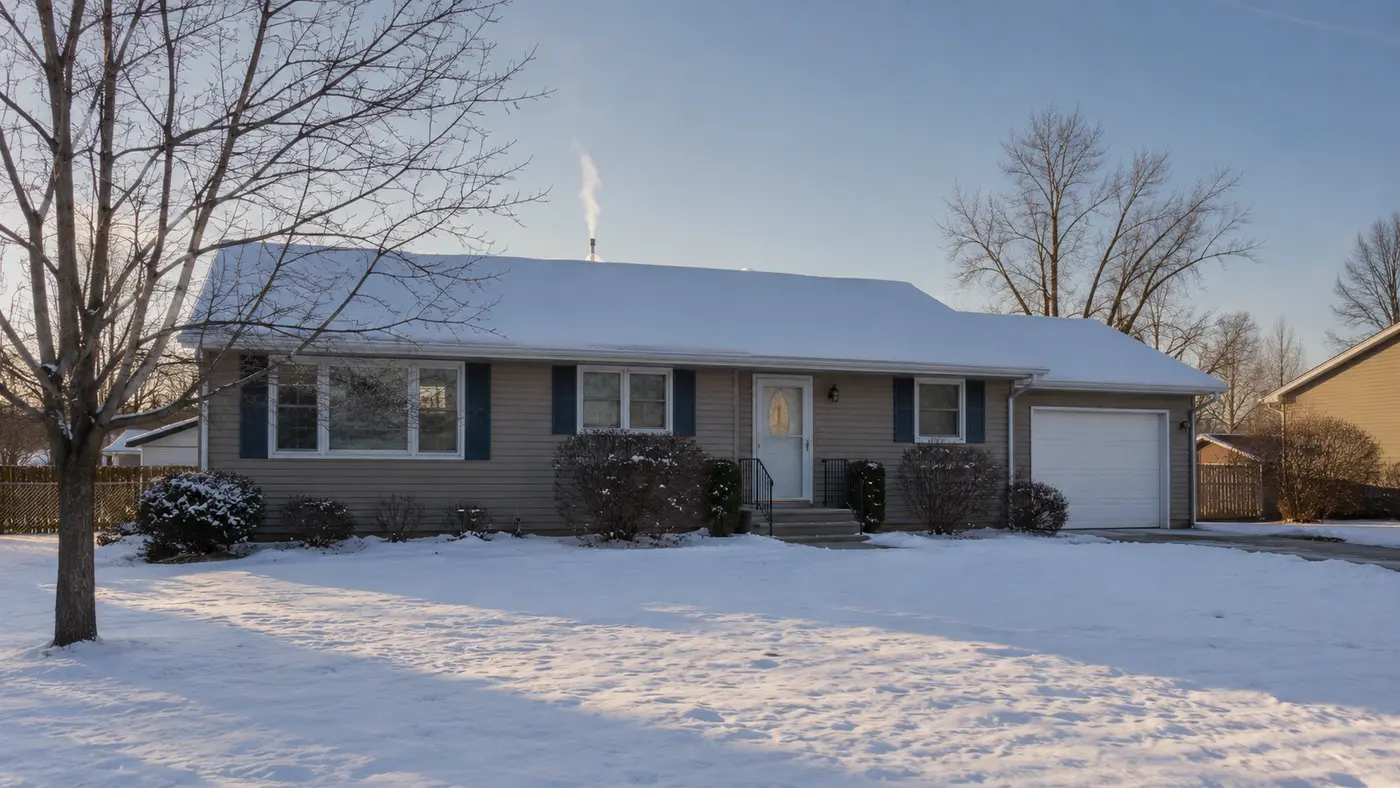
- Winter: the vented air carries moisture, so a little steam or frost at the vent on a subzero eastern South Dakota morning is normal. Systems here get routed to handle it.
- Timing: most installs are done in about a day, and deadline installs during a home sale are routine. We work inside inspection windows.
Install Questions, Answered Before You Ask
Is my quote fair? What should a system include?
A fair quote itemizes rather than hand-waves. It should name the suction point strategy: slab core, sump pit, or drain tile. It should list the pipe route, the fan model, sealing of penetrations, a manometer gauge, and vent termination above the roofline. And it should end with the post-install retest plan. If a quote is just "radon system: $X," you can't compare it to anything. People post their quotes to Reddit asking strangers if they got ripped off; we'd rather show the math up front so you don't have to.
What makes one house cost more to mitigate than another?
Foundation complexity, mostly. A single slab with an accessible sump pit is the cheap end. Costs climb with additions on separate slabs, since a separate pour often needs its own draw point. They climb with dirt crawlspaces (membrane material and labor), finished basements (careful routing), and very high starting levels that need a bigger fan or second point. Permits and pipe-route length play small roles. None of this is exotic; it's the same list every legitimate installer prices from, and your quote should show which of these apply to your house.
How much does it cost to run the fan?
About $3 a month in electricity, per South Dakota DANR's estimate. The fan is small, comparable to a bathroom vent fan, and it runs continuously by design. Budget-wise, the longer-term line item is the fan itself: warranties typically run five years, DANR plans on an 11-year average life, and replacement costs $145 to $300. That's the entire ownership cost of the system.
How long does installation take?
Most residential installs are done in about a day, often a single morning-to-afternoon visit. Cutting the suction point, setting the pipe run, mounting the fan, and sealing take a few focused hours on a standard basement. Crawlspace membranes and multi-slab homes take longer. After install, the fan needs to run at least 24 hours before the verification test starts, and levels settle into their new normal over the following days.
Who pays for mitigation, buyer or seller? Can you install before closing?
Who pays is pure negotiation; the EPA's real estate guidance explicitly leaves it to the parties. It gets settled every way imaginable. The seller fixes it to keep the deal clean, the buyer takes a credit at closing, or the two sides split it. A mitigated house with a documented retest is a better listing than an untested one, which gives sellers a real incentive. On timing: yes, installs happen inside transaction windows routinely. With seller permission the system can go in before closing, and the verification test follows.
How do I know the system is working, and when do I retest?
Two layers. Daily: glance at the U-tube manometer on the pipe. Uneven fluid means the fan is pulling; level fluid means it isn't, and it's time for service. Proof: retest with the fan running at least 24 hours, within 30 days of install, per EPA protocol. Then retest every two years, and after any foundation or HVAC work. One warning that saves grief: never turn the fan off to save electricity. Suction is the entire mechanism, and levels climb right back once it stops.
Not sure your level justifies a system? Start with a proper radon test instead. Two days of data beats guessing.
Get your radon level fixed, then proven
A firm quote with the reasoning shown, an install in about a day, and a retest plan you can hold us to.