
Commercial
Commercial Radon Mitigation in Sioux Falls
The physics don't change when the building gets bigger, but the engineering does. Commercial radon work is about diagnostics: bigger slabs, more foundation sections, and HVAC systems that push air in every direction.
Sioux Falls Buildings That Should Get Tested
This corner of southeastern South Dakota sits in the EPA's highest radon zone, and the county-by-county numbers bear it out. That applies to every slab in the region, not just houses. Testing is cheap insurance for:
- Daycares and preschools. Kids spend full days in these rooms, often at or below grade, and parents ask about air quality now.
- Offices and clinics. Staff spend full workweeks in the building, all year. Ground-floor and basement workspaces carry the exposure.
- Rental properties and multi-unit buildings. Ground-contact units are the concern. Landlords increasingly test ahead of tenant questions rather than after them.
- Churches, gyms, and community buildings. Large slab-on-grade footprints with long occupied hours.
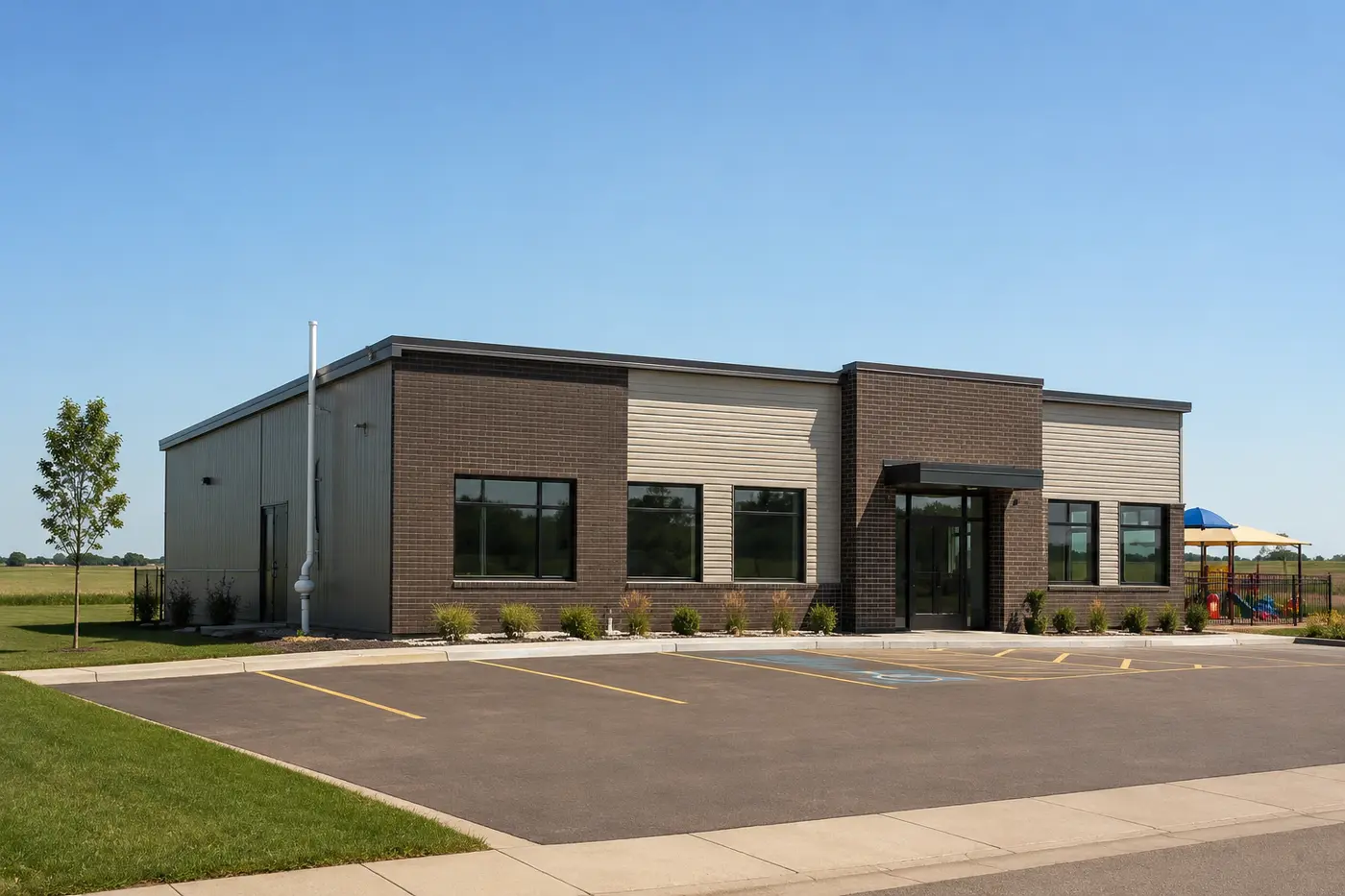
Why Commercial Jobs Get Scoped On Site
A house usually needs one suction point. A commercial building might need one, or six, because additions pour separate slabs and each isolated section holds its own soil gas. Mechanical systems matter too: exhaust fans and rooftop units change building pressure, which changes how radon moves.
So we don't quote commercial work over the phone. The process looks like this:
- Baseline radon testing in the occupied ground-contact spaces, run to EPA closed-building conditions.
- A walkthrough covering foundation sections, slab penetrations, mechanical rooms, and where vent stacks can run.
- Diagnostic measurements to map how air actually moves under the slab before anyone drills anything.
- A written proposal: suction points, fan specifications, pipe routing, and the verification testing plan.
What Ownership Gets Out of It
- Documentation. Test results and system records you can hand to a buyer, an insurer, a licensor, or a worried parent.
- A problem you fix once. Active depressurization runs continuously and gets verified by retest, on the same EPA protocol used for homes.
- Small operating cost. SD DANR pegs a system's power draw at about $3 a month, so even several fans barely register on a commercial utility bill.
Questions Building Owners Ask
Why won't you quote a commercial job over the phone?
Because the honest answer to "how many suction points" lives under your slab. Additions get poured as separate sections, and each isolated pour traps its own soil gas. Rooftop units and exhaust fans change building pressure too, which changes how radon moves. A walkthrough and diagnostic measurements tell us what the building needs. Then the number we give you means something.
Is testing a building different from testing a house?
The protocol is the same: closed-building conditions and a 48-hour minimum, per EPA guidance. The difference is coverage. A house needs one test in the lowest livable level. A building needs results for each occupied ground-contact space, because one slab section can run high while the next reads clean. You get every number in writing, per space.
How long does commercial mitigation take?
It depends on suction points, and that's not a dodge. A residential system goes in within about a day. A building needing one draw point isn't much different. One needing six, with vent stacks routed through mechanical rooms, takes longer. The scoped proposal includes the timeline, so ownership can plan around occupied hours.
How far from Sioux Falls do you take commercial work?
Farther than we go for houses. A commercial job justifies the drive, so we cover the whole metro for this work: Minnehaha, Lincoln, Turner, and McCook counties. If your building sits at the edge of that map, call anyway. The scoping visit is how we decide, not a line on a service-area list.
Own a house too? The mitigation system installation page covers how residential systems go in.
Get your building tested
Start with baseline numbers. If the building needs work, you'll get a scoped proposal with the reasoning attached.